During the height of the women’s suffrage movement, Newport became one of the principal centres of the militant Women’s Social and Political Union (WSPU) in Wales. The town attracted several visits from leading suffragettes, including Emmeline Pankhurst and her youngest daughter, Adela Pankhurst, whose speeches helped inspire a new generation of local activists.
The Pankhurst Visits
Adela Pankhurst (1907)
In March 1907, Adela Pankhurst visited Newport to deliver a public lecture entitled “The Strike of the Sex”, explaining and defending the WSPU’s increasingly militant campaign for women’s suffrage. The meeting was chaired by Mary Keating Hill, the first Welsh suffragette to be imprisoned for the cause.
Emmeline Pankhurst (1909–1910)
Emmeline Pankhurst visited Newport on several occasions, speaking at the Temperance Hall in 1909 and the Lyceum Theatre in 1910 as part of wider tours across South Wales.
Her meetings attracted large audiences of working- and middle-class women, encouraging them to join the WSPU and helping to raise funds for the national campaign. During these speeches she defended militant tactics, arguing that governments only responded to sustained political pressure, famously comparing the movement to the “impatient, screaming baby” that is fed first.
Newport’s Militant Suffragettes
The Pankhursts’ visits helped transform Newport into one of the most active centres of militant suffrage campaigning in Wales.
Lady Rhondda
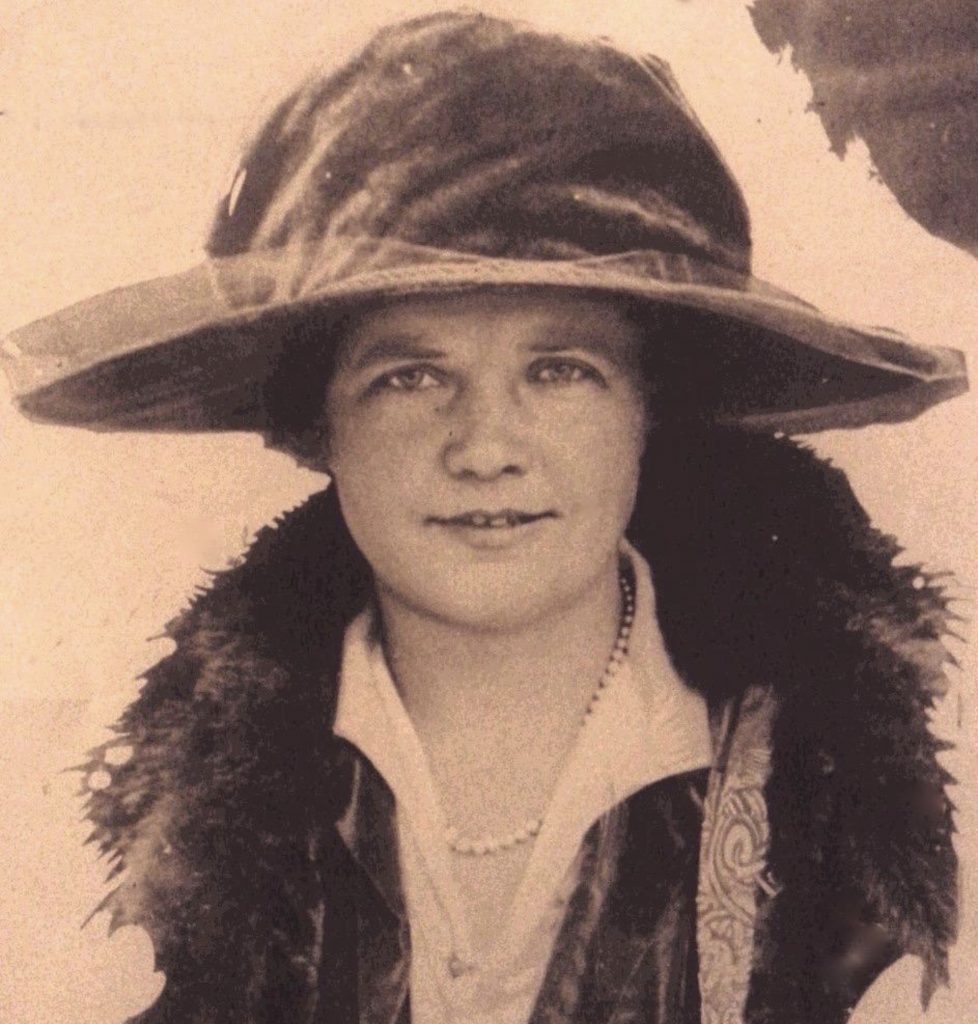
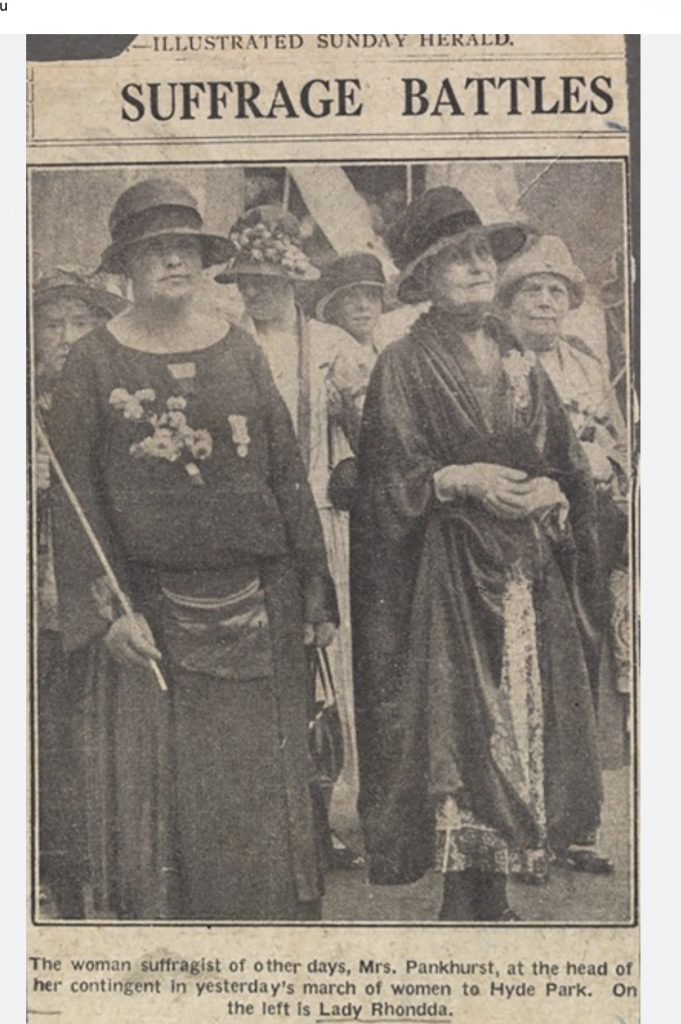
Among those inspired by the WSPU was Margaret Haig Thomas, later Lady Rhondda, daughter of Welsh industrialist and politician David Alfred Thomas. Embracing the WSPU motto “Deeds, not Words,” she became one of the movement’s most prominent Welsh activists.
Her direct-action campaigning included:
- joining protest marches alongside Emmeline Pankhurst;
- climbing onto the motor car of Prime Minister H. H. Asquith during a demonstration in an attempt to halt his progress and confront him;
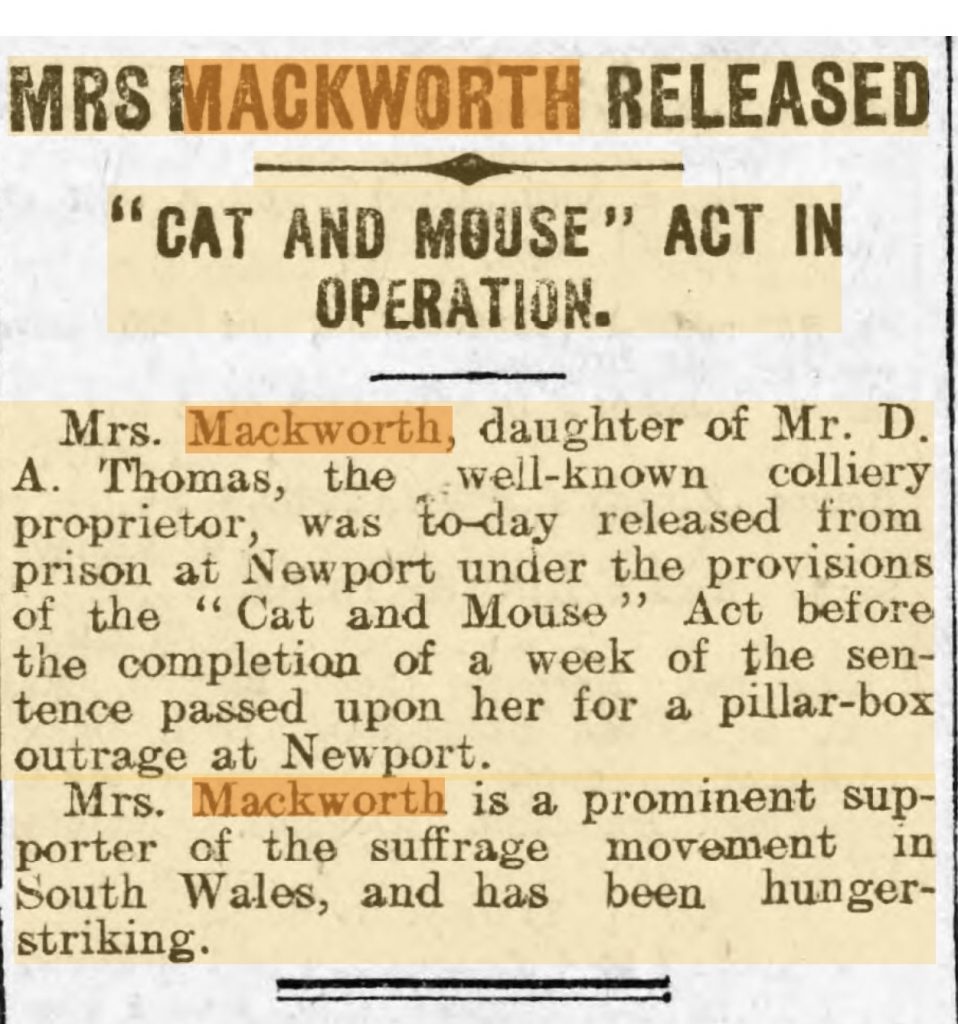
- setting fire to a Newport pillar box using a chemical incendiary device;
- taking part in the London window-smashing campaign;
- repeated arrests and imprisonment, including time at Usk Jail;
- hunger strikes and force-feeding while in prison.
Lady Rhondda later recalled the Asquith protest with humour, describing how she ended up sprawled across the bonnet of the Prime Minister’s car. Although intended as a non-lethal act of civil disobedience, the protest reflected the increasingly confrontational tactics adopted by the WSPU before the First World War.
Following the achievement of women’s suffrage, Lady Rhondda abandoned militancy and became one of Britain’s leading campaigners for women’s equality. She founded and edited the influential feminist magazine Time and Tide and unsuccessfully challenged the exclusion of hereditary peeresses from sitting in the House of Lords, arguing that women should enjoy the same constitutional rights as men.
A Newport Headquarters
The success of the Pankhursts’ visits enabled the WSPU to appoint Rachel Barrett as Newport’s full-time organiser, establishing a permanent local headquarters and strengthening the town’s role within the Welsh suffrage movement.
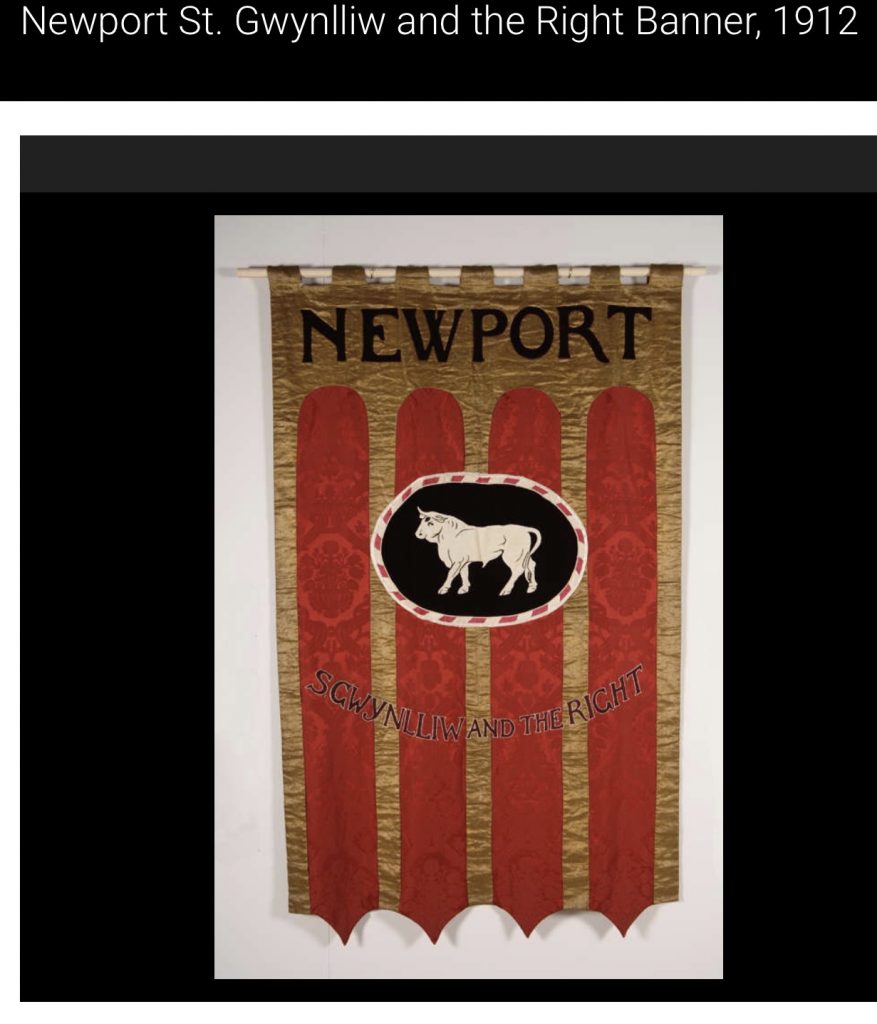
Newport suffragettes also adopted St Gwynllŵg’s (St Gwynllyw’s) banner as a symbol of their campaign. According to local tradition, in 1533 women carrying the saint’s banner intervened between the armed retainers of the Morgans of Tredegar and the Herberts of St Julians, successfully bringing an end to the conflict. The suffragettes embraced this powerful local story of women acting to bring about political change.
Legacy
Today, Newport’s important contribution to the women’s suffrage movement is commemorated by the Lady Rhondda statue on the eastern side of the Millennium Footbridge.
The statue was created by sculptor Jane Robbins, who also produced the celebrated bust of Emmeline Pankhurst at the Pankhurst Centre in Manchester, providing a lasting artistic link between Newport and one of the most influential figures in the fight for women’s votes.