“A true legend of rugby league; a pioneer who broke barriers, inspired generations, and left a legacy that will never be forgotten,” Sir Kevin Sinfield told The Observer in respect of Sir Billy Boston, who died on August 31 aged 92. His funeral was held in Wigan on September 10 2026 before large crowds.
Boston was the sixth of eleven children raised in Tiger Bay, the son of an Irish mother and Sierra Leonean father. Despite playing rugby union for Cardiff Internationals and Neath, his talent was overlooked by Cardiff RFC and Welsh rugby. Rugby league scouts recognised his ability, and in 1953, aged 18, he signed for Wigan.
He became one of rugby league’s greatest players, scoring 478 tries in 488 appearances. In 1954, he became the first black player to tour Australia and New Zealand with Great Britain.
Yet Boston always regretted not representing Wales: “I would have given all the league glory away just to once pull on the red shirt of Wales.” He later recalled: “Cardiff didn’t want to know. I wanted to play for Wales with all my heart but it wasn’t to be.”
Wales did not select a black player until Mark Brown in 1983. Boston’s story highlights how rugby league provided opportunities for talented players overlooked by Welsh rugby because of race.
This prompted some questions for me. Like Cardiff, Newport as a long standing and bustling sea-port has its own sizeable immigrant Afro-Caribbean and Asian populations. So who was the first black player from the area to make a mark in rugby of either code? Who was the first black player from Newport to play at Rodney Parade? Did Newport RFC have the same attitude to denying black sportsmen a chance as their big city rivals?
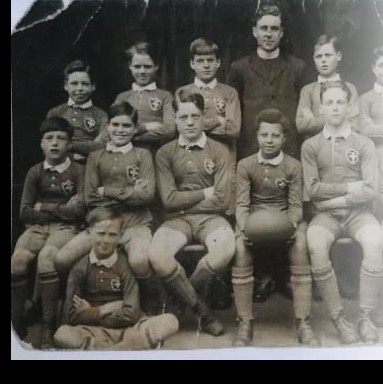
Alexander Givvons was dubbed a ‘prophet without honour’ by the rugby journalist Peter Jackson. He was a supremely talented young black boy from Pill who made an immediate impact in schools and local club rugby at inside half. He can lay claim to being the first black player from Newport to play at Rodney Parade but without the honour of playing for his home town club.
He was overlooked by Newport and played for Cross Keys. His ability was recognised by rugby league scouts and he had a highly successful career with Oldham RLFC also becoming a highly respected referee.
Like Boston, Roy Francis, Clive Sullivan et al rugby league (the supposed enemy) gave Alec opportunities not afforded to young black men playing rugby in South Wales.
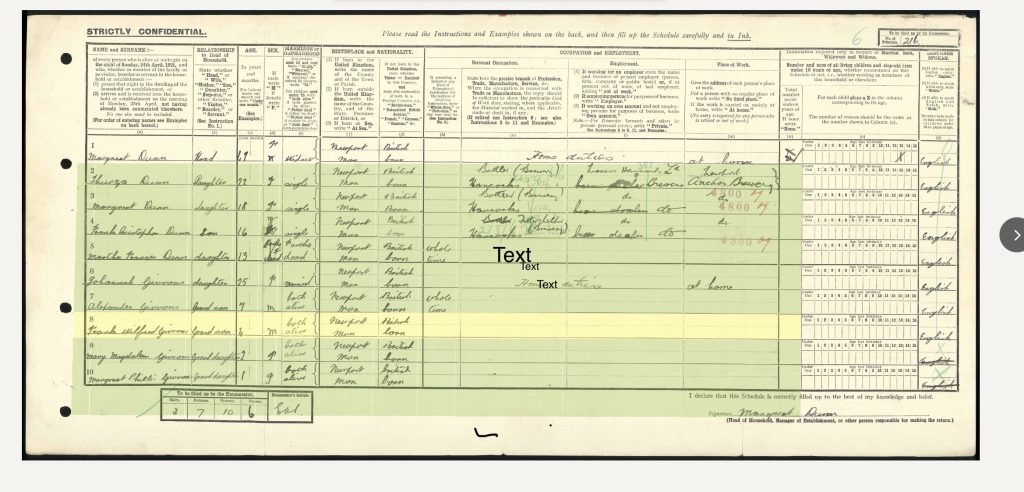
Alexander Givvons was born on 2 November 1913 in Pillgwenlly, Newport, Monmouthshire, the eldest child of Alexander Givvons (b. 1888), a merchant seaman from St Thomas in the West Indies, and his wife Johanna Dunn (1896-1987). He had five siblings, including a half-brother Trevor Williams (b. 1925) from his mother’s second marriage. He was known as Alex (latterly Alec after his move to Lancashire).
Alexander lived with his family at 57 George Street. The street was a mix of households many of whom worked in steel making or at the docks. There were a number of boarding houses on George Street (at numbers 3 and 4) that provided accommodation to black and Asian merchant seamen. It is likely that Alexander as a five year old was living at George Street during the frightening mob violence of the race riots in June 1919. He is referenced in newspaper reports in December 1923 during a violent altercation between his uncle and another seaman where his mother Johanna (Hannah) is called as a witness. In giving her evidence Johanna states her husband is away at sea. His father died on March 20 1926 in Oran in France (present day Algeria).

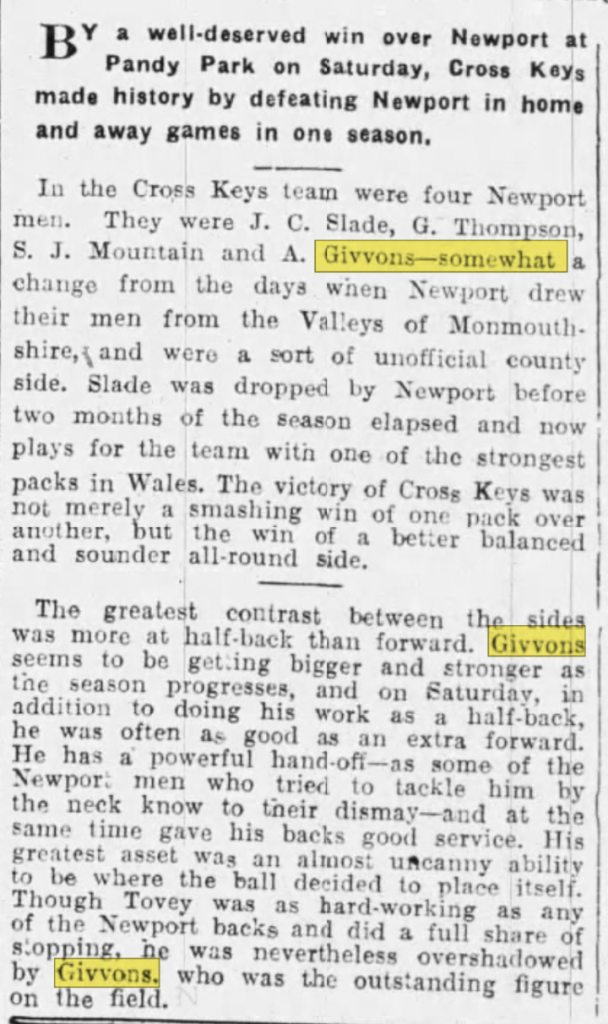
Alexander attended Holy Cross Roman Catholic School, near Canal Parade, well known locally for its sporting prowess. He joined the school Rugby Union team at the age of nine and soon became its captain, and also played for the Monmouthshire schools’ team. The following report from the Football Argus (October 1927) is typical of Givvons play for Holy Cross and recommends his inclusion in the Newport schoolboys team. They played their matches at Rodney Parade.
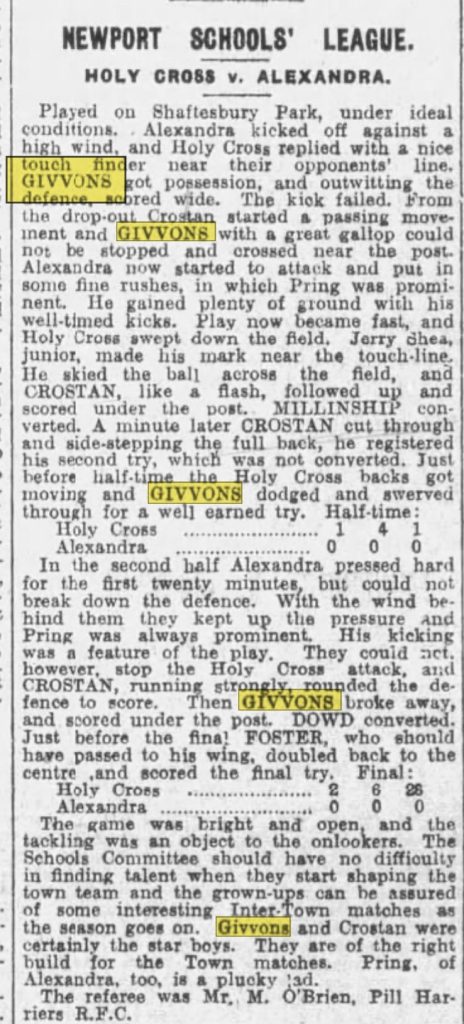
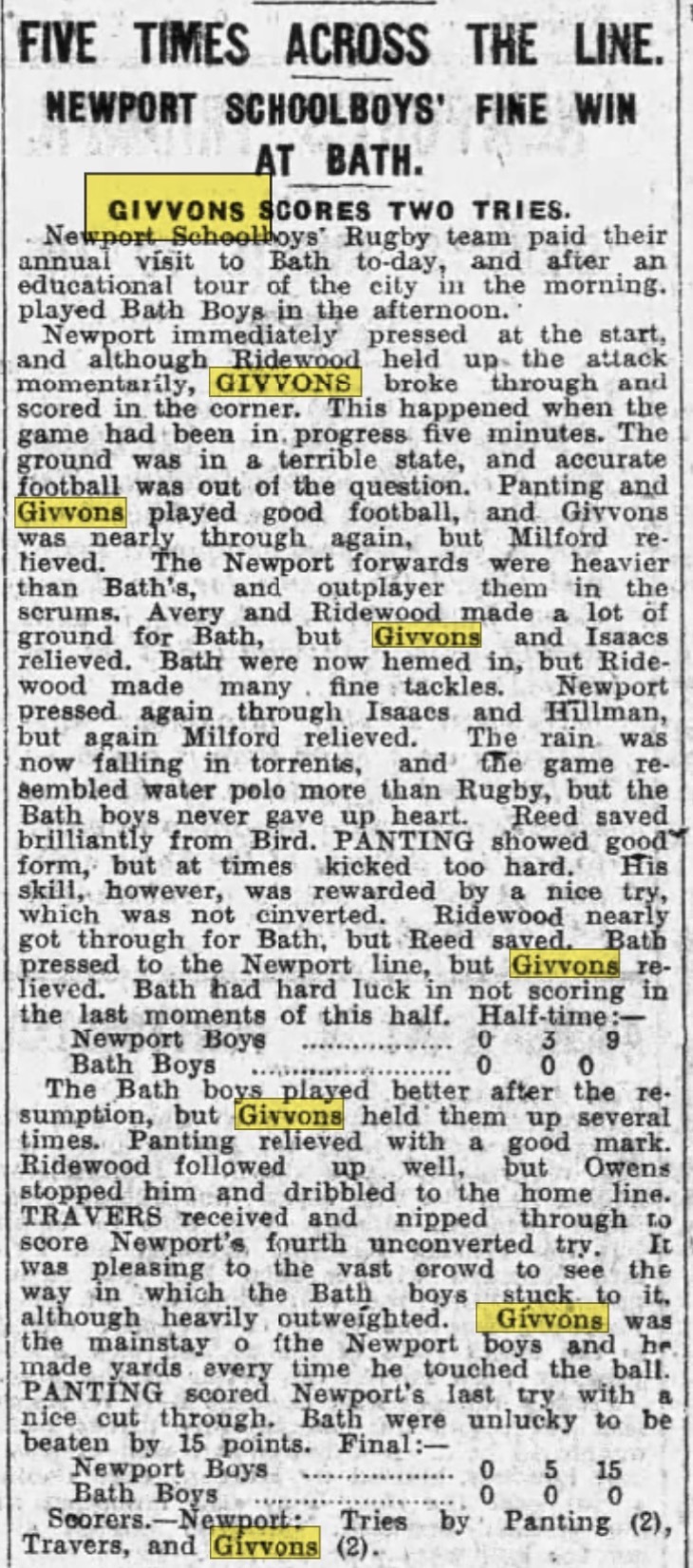
He enjoyed playing rugby at Newport’s Rodney Parade, however he often spoke about not being able to afford to socialise with the college boys who returned home for the summer months. He therefore preferred to play for his local club, Pill Harriers RFC, The first mention of Givvons for Pill Harriers appears to be in a home fixture with Machen on Boxing Day 1931, a 33-3 victory. He features prominently in matches against Blaina and Penarth and then in their final match of the season with Cross Keys, a heavy defeat at Pandy Park.
Givvons impressed immediately due to his speed and agility, at the Cross Keys pre-season trial he was the stand out player “swift, well directed passes…quick bursts away from the scrum…a player of merit” commented “Saxon” in the Argus. He joined the Cross Keys team aged 19 playing at scrum-half and during a match against Pontypool, Welsh International Clem Lewis noted that ‘he is the biggest discovery that I have seen since the war’ (Daily News, 1932).
A remarkable article by ‘Specto’ in the Football Argus in October 1932 says that the brilliant Givvons is likely to get a Welsh trial based on his play but the journalist worries about a colour bar preventing players from progressing into international rugby football. It references J.E.Peters of Plymouth being the first black player selected by England. It also notes an incident at a Cross Keys match where Givvons was roughed up and racially taunted by an opponent. A match against Risca references him being ‘rough-handled’. Sure enough when it came to the Welsh trial, despite his excellent form, Givvons was not selected.
Givvons played some of his best rugby against his home town club including a famous double in the 1932-33 season where a Cross Keys team including four Newport men trounced the Black and Ambers. But the fact remains why did Newport overlook or ignore such a fine rugby footballer? In his book Newport Rugby Greats Alan Roderick refers to Givvons as one that got away without referencing his unique background. Despite a strong working class tradition amongst Newport’s players, particularly at forward, it did not tap into this community and it was another fifty years before a black player played for the club!
According to Peter Jackson Givvons told Oldham’s historian Michael Turner “They were very good to me at Rodney Parade but they always had a lot of college boys back during the holidays. I couldn’t afford to socialise with them and Newport were always the most amateur of clubs in terms of what they would give a player in terms of financial help. I went to play for Cross Keys and had some marvellous times there.’’ Was it a more a case of incompetence than racism that prevented Newport from providing an opportunity to Givvons?
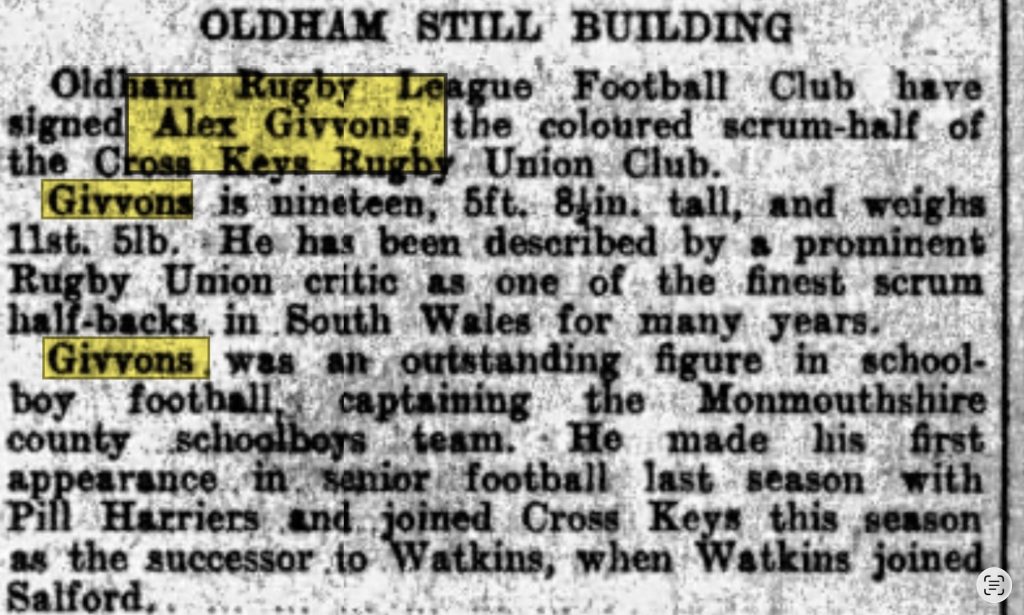
The committee at Oldham Rugby League Club were informed of Givvons’s capabilities and he was signed in January 1933. As other codebreakers made their way north from Wales, it became very important to Givvons that people knew his leaving Newport was not a result of racism. Newspapers at the time report heavily on the new player and there was much interest in his potential ability to play for Wales.
The newspapers in the north – such as the Huddersfield Examiner – were well informed about Alex’s football abilities.
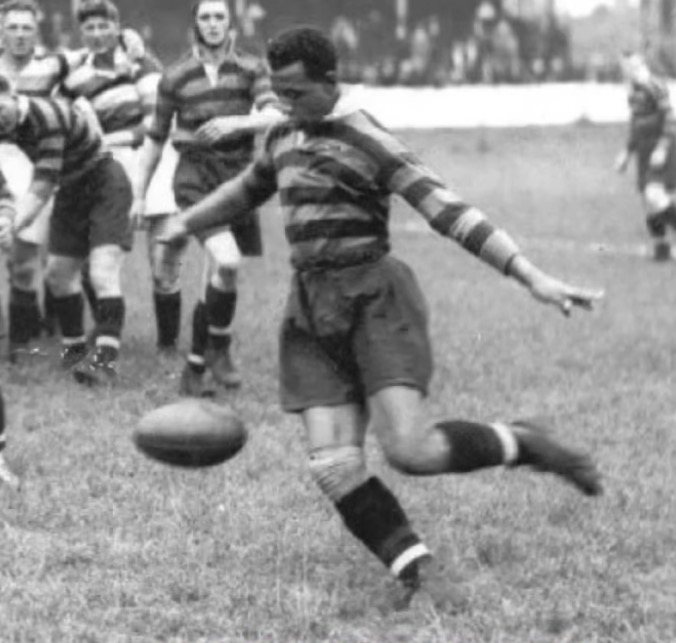
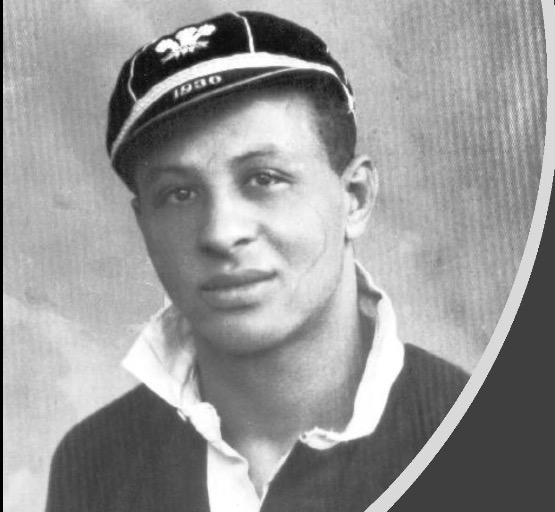
Givvons played a total of 241 first class matches as halfback and later loose forward for Oldham from 1933 to 1949 (with a break between 1944 and 1948 where he played for Huddersfield). He earned six caps for Wales between 1936 and 1939, and was the second Black player to represent Wales in Rugby League (after George Bennett in 1935), finishing on the winning side in all six games. He also toured France twice with the Great Britain Rugby League team.
In 1934 he married Eunice Clayton and and they had two sons, Alexander (1935-2017) who also played Rugby League, and Trevor (b. 1946).
Givvons encouraged his half-brother Trevor Williams to follow in his footsteps and play for Oldham. However, following his transfer from Cross Keys he didn’t get on with the Oldham coach and despite also being tipped to play for Wales Trevor gave up playing. Givvons later attributed this to racism that he suffered.
Peter Jackson recalled “After the end of his playing career, Givvons became a coach and kitman for the Oldham ‘A’ team. Much loved, he could often be seen at the club, supporting the players and guarding the sacred changing rooms from the gaze of reporters and photographers. When asked about this he replied with typical modesty, ‘I’m just doing my job’.”
Allison Wild, an Oldham fan, stated on Facebook “Mr Alex Givvons Snr was a lovely man. I would see him regularly walking his little Yorkshire terrier in Waterhead Park, as he lived on Watersheddings Street. If I saw him on game days on my way to The Black Horse on Ripponden Road to get the coach to away games, he would always say “Who are we playing today dear” and “Give them a shout for me”. He was such a polite, quietly spoken man, and he served The Roughyeds so well for so many years. God bless you Sir, you were a true gentleman xx”
The Saddleworth Independent stated “Alex was a fine all-round sportsman, a well-known member and former president of Crompton and Royton Golf Club, represented Lancashire at water polo and played at Manor Tennis Club, Waterhead. In later life, as a former rugby league referee with a failing hip, he picked up his pen to write a regular article in the Oldham RL Club’s match-day programme, headed ‘Alex Rules OK’.
His brother Trevor said: “Alex was a great sportsman from a rugby league family but more importantly for me, he was a brother whom I could always look up to.”
In 1995, when the Oldham Rugby League Hall of Fame was introduced, Givvons was chosen to unveil it and was later inducted into it. A street was later named after him, ‘Givvons Fold’ near the former stadium in the Watersheddings district of Oldham. Oldham Council stated this was unusual for someone still alive but they wanted to reward him for his ’long and distinguished’ career.
His sister Marge Le Clare appeared in an Argus article in 1999 to recognise the achievement saying how ‘loved and respected’ Alex still was in Newport. Photographs of him can be found at Pill Harriers RFC but this is the only recognition of him in his home city.
He was a prodigious talent from an emerging community in Newport’s dockland who could only find a home in the northern heartlands of rugby league. This does not diminish him in any way, indeed he is a true pioneer of rugby football and deserves a proper place in Newport’s sporting history.
Alex Givvons died on 14 June 2002 in Oldham.