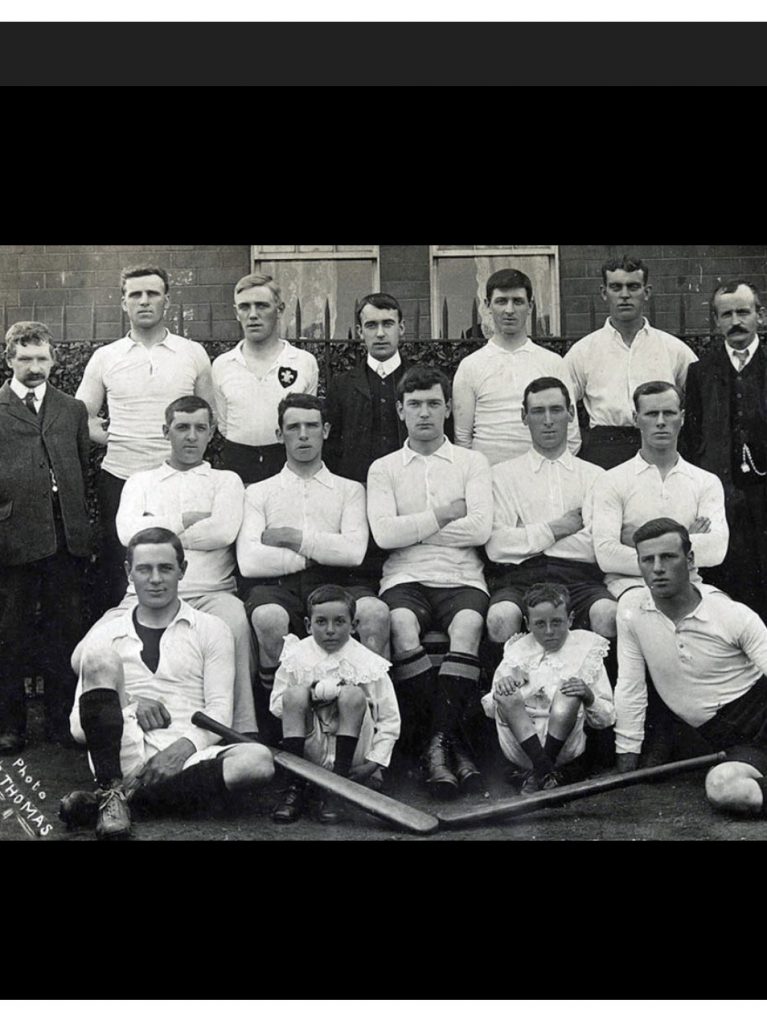
Ask anyone in Newport over the age of 40 about the rules of baseball and they are unlikely to describe anything resembling the American game. Instead, they will recall a local sport closer to rounders, with deep roots in the city’s parks and communities.
Welsh baseball is a traditional bat-and-ball sport native to the port cities of Cardiff and Newport, and to Liverpool in England. Its origins stretch back to the 18th century. While it shares distant ancestry with American baseball, it developed along a distinct path, borrowing much of its terminology and structure from cricket.
The Game
Welsh baseball is played during the summer months, primarily in South Wales—especially Cardiff, Newport and surrounding towns—alongside a smaller but historic presence in Liverpool. Teams consist of 11 players. The ball is delivered underarm by a bowler known as the “feeder” to the batter, or “striker”. There are no foul lines, allowing the striker to hit the ball in any direction. Runners complete two bases per run rather than four, and matches are typically played over two innings per side, with innings limited by outs rather than time.
History and Growth
The game was codified in the 19th century by clubs such as Newport, Roath and Grange Albion. By the late 19th and early 20th centuries, Welsh baseball rivalled rugby and football in popularity in parts of South Wales. Its growth was supported by strong local leagues, crossover participation from rugby and football players, and the establishment of schools and women’s competitions.
By the early 1920s, there were more than 60 baseball clubs in South Wales and over 1,400 registered players. Newport teams played at venues including Shaftesbury Park, Coronation Park and the Whiteheads Sports Ground. Organisational milestones followed, including the creation of the Cardiff Schools Baseball Association and the Cardiff and District Ladies League in 1922, and the Newport Schools League in 1923. In 1927, the International Baseball Board of England and Wales was established to standardise the laws of the game, resulting in a unified rulebook.
Decline and Cultural Significance
After the Second World War, the sport entered a long decline. Urban change, the loss of playing fields and the rise of professional sports all took their toll. Nevertheless, Welsh baseball remained a powerful marker of local and cultural identity in south-east Wales. Governed by the Welsh Baseball Union, it survived at amateur level, sustained by strong community ties and family traditions.
Annual international matches between Wales and England were a highlight of the sporting calendar and regularly featured on Welsh television until 2015. The sport’s significance was recognised in Parliament in an Early Day Motion tabled on 15 July 1996 by Paul Flynn MP, which praised Welsh baseball as a “unique” and “highly skilled” British sport with more than a century of history in Newport, Cardiff and Liverpool.
Players and Moments
Welsh baseball has produced many notable figures, including David Bishop, Mike and Alec Rayer, “Dubba” Richards, “Slogger” Slocombe, Mark Ring, Norman Parselle and Mark Powell. St Michael’s Parselle captained Wales to three consecutive international victories over England between 2005 and 2007.
The game has also witnessed extraordinary individual performances. In 1964 at Maindy Park, Cardiff, Paddy Hennessy bowled England out—11 batters—for just six runs in 30 balls. Fifty years later, in 2014, Matthew Hopkins produced an even more remarkable spell at Whiteheads in Newport, dismissing England for just two runs.
Recent Years
A 2013 South Wales Argus feature on baseball in its Newport heartland noted that women’s baseball remained popular, while the men’s game had declined. Peter Sanders, secretary of St Michael’s, described it as “a great game, with a great tradition”, highlighting the generational commitment of families determined to keep it alive.
By 2016, however, the international series had ended and the league was abandoned, marking the sport’s lowest ebb. Revival efforts began in 2021 with the restoration of a local league, including four teams from Cardiff and a Newport side. That year’s Welsh Baseball Union Cup final saw Newport City face a victorious Grange Albion. More recently, five teams competed for the Dewar Shield, with St Albans emerging as winners and Newport finishing third.
In short, Welsh baseball remains a historically significant, locally rooted sport: simpler, faster and more informal than its American cousin, and an enduring part of South Wales’ sporting heritage.
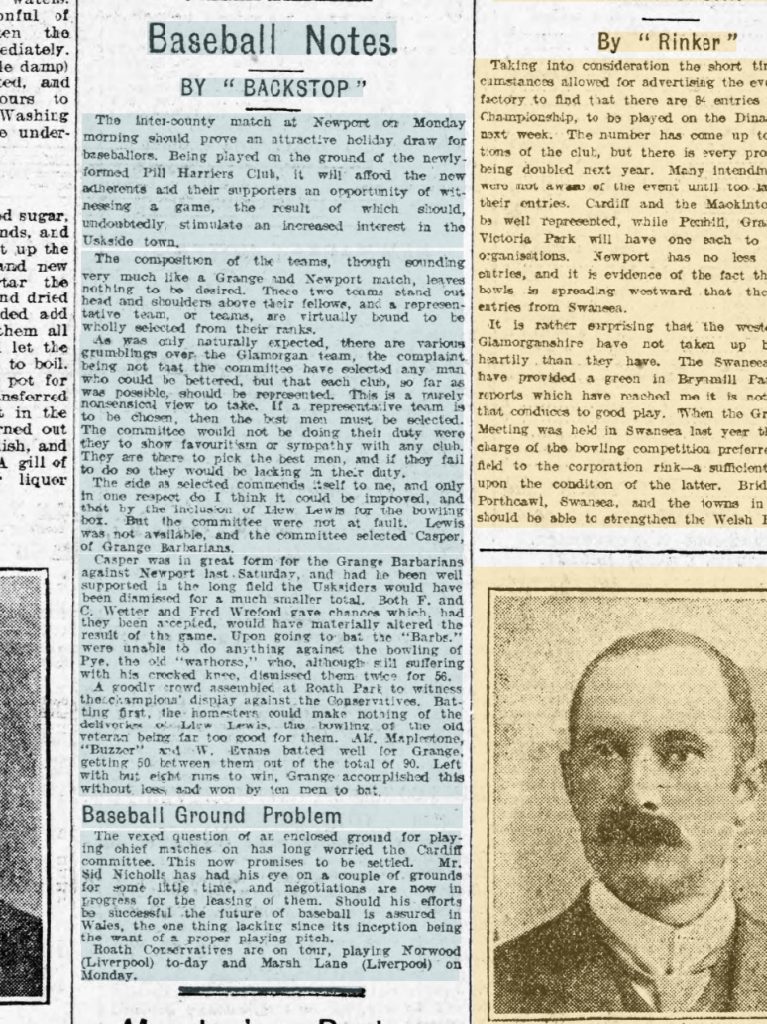
St Michael’s
The club was founded in 1908 in association with St Michael’s Catholic Church in Pill, with the aim of providing sporting opportunities for its young members. Since its formation, the club has enjoyed a proud and successful history.
Its most remarkable achievement came in 1920, when it secured a unique treble by winning the League, the Argus Cup and the Florida Cup. Further honours followed over the decades, including victory in the Silver Bowl and the League One championship in 1971. In 1986, the club lifted the Welsh Brewers Cup after defeating Alexandra Old Boys in the only all-Newport final in the competition’s history.
St Michael’s has been home to a number of notable figures. Alongside celebrated Welsh baseballers such as Norman Parselle, local hero Nathan Blake is among those to have represented the club. The diamond at Coronation Park has also hosted high-profile footballers, including former Chelsea, Arsenal and Wales international Peter Nicholas.
The club has strong links with Newport County, with former players Mike McLaughlin, David Williams, Peter Sanders, Brendan Dowd and Chris Stanton all having worn the green and white of St Michael’s. The club’s sporting reach has extended beyond football, with Ryan James, scrum-half for Newport and Cross Keys, also representing St Michael’s.