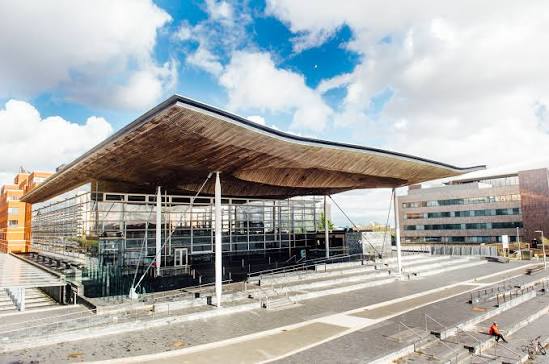
The disagreement between the First Minister and the Prime Minister about the future of Welsh devolution is all too revealing.
The First Minister believes, ultimately, in Welsh independence. The Prime Minister is also very clear that most decisions must be made by people in their localities not by Westminster (and probably not in Cardiff).
The question for Plaid Cymru and the Welsh Government is whether Wales has effectively moved from having decisions made in Westminster to having many of those decisions made in Cardiff Bay, without necessarily bringing decision-making much closer to the communities affected by them. It is a fundamental weakness in the Welsh devolution settlement. Are they willing to except that Welsh devolution means decisions being made locally in places such as Newport rather than by a centralised Welsh administration?
Westminster has transferred certain powers to Cardiff.
The Welsh Government exercises considerable executive control over those areas.
The Senedd scrutinises the Welsh Government and passes legislation.
Local authorities are left implementing many policies, often with limited financial freedom and significant central direction.
The result is that Cardiff has become the dominant political and administrative centre of Wales.
For someone living in Newport or rural Powys, the experience can sometimes be that decisions are still distant, just by a different government.
There is a genuine argument for national coordination in areas such as:
NHS planning.
Major transport infrastructure.
National economic development.
Environmental protection.
Redistribution of resources between richer and poorer communities.
But there is a difference between setting national objectives and controlling the details of delivery.
A government in Cardiff should not necessarily have to decide how every community approaches housing, town-centre regeneration, local transport or economic development.
Is Plaid Cymru just interested in acquiring powers?
The evidence is that the Senedd and Welsh Government has not used them well – the NHS (waiting lists), poor Education standards, policy issues such as 20mph limit. Small successes have occurred e.g. free school meals, breakfast clubs
The quality and calibre of politician is not good – little more than senior councillor level in local authorities.
Mistakes have been made
The impact of devolution in Wales on economic growth and the standard of living has been very limited.
Increasing the size of the Senedd, is more money being paid out for the poor performance?
The New electoral system – break between direct constituency representation and electors.
What local Welsh devolution could look like
Welsh Government and Senedd
National legislation, taxation, NHS strategy, education standards, national infrastructure, economic strategy and redistribution.
Stronger regional institutions led by local mayors involving combined authorities as in England
Strategic transport, regional economic development, major planning, skills and investment across neighbouring authorities.
For example, a regional authority in south-east Wales led by a Mayor should have meaningful influence over transport and economic development rather than having to rely on decisions made by ministers in Cardiff Bay.
Empowered local authorities
Town-centre regeneration, local housing priorities, community facilities, local transport, neighbourhood planning and service delivery.
The ultimate test of devolution shouldn’t be how much power the Senedd has acquired. It should be how much more control ordinary Welsh communities have over their own affairs.