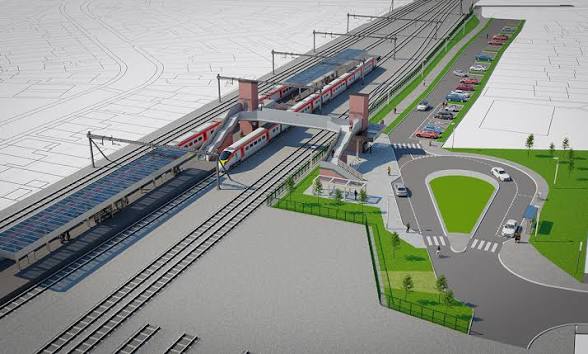
While the proposed new stations around Newport have not been abandoned, they have taken considerably longer than originally envisaged. The main reasons are:
- No dedicated funding until recently. Although the Burns Commission recommended five new stations in 2020, neither the UK nor Welsh Governments initially committed the capital funding needed to move beyond feasibility studies. It was only in the 2025 Spending Review that the UK Government announced £90 million over four years to develop the stations.
- Complex governance. Rail infrastructure is owned and managed by Network Rail, services are operated by Transport for Wales, transport policy is devolved to the Welsh Government, while major rail enhancement funding comes largely from the UK Government. Securing agreement between all parties has taken several years.
- Extensive design and consultation work. Before construction can begin, each station requires feasibility studies, business cases, environmental assessments, public consultation and planning approvals. Transport for Wales has spent the past three years developing these proposals and consulting local communities.
- Changes to the original proposals. Some schemes have been redesigned to improve value for money and integration with the South Wales Metro. For example, Llanwern station proposals have been revised since the Burns Commission first reported, contributing to longer delivery times.
- Prioritisation of other rail projects. The South Wales Metro, Core Valley Lines transformation and wider rail enhancement programmes have competed for funding and engineering resources, slowing progress on the Burns stations.
The Chancellor’s recent Spending Review has therefore been significant because it moves the project from the planning stage towards delivery. Work on all five Burns stations is expected to begin during this Parliament, with construction of two stations anticipated by 2029. Magor and Undy is expected to be the first station completed, while opening dates for Newport West, Llanwern and Somerton will follow in later phases.
The proposed stations are intended to support a new “local metro” service running on the South Wales Main Line’s relief tracks, rather than simply adding platforms to existing long-distance services. The aim is to create a high-frequency stopping service between Cardiff and the Severn Tunnel Junction while preserving fast inter-city services on the main lines.
The current concept would see trains calling at:
Cardiff Central → Cardiff East → Newport West → Newport Central → Somerton → Llanwern → Magor & Undy → Severn Tunnel Junction
From Severn Tunnel Junction, services would continue into Bristol, providing direct cross-border links without passengers having to change trains. Existing long-distance services to London, Swansea and Manchester would largely remain unchanged, apart from additional stops on the Cheltenham route.
Transport for Wales is planning a turn-up-and-go frequency, with trains operating approximately every 30 minutes throughout the day, although the final timetable has not yet been confirmed. During peak periods, frequencies could increase as the South Wales Metro develops. The improvements also depend on upgrades to the relief lines, allowing more stopping services without delaying express trains.
The new stations have been designed to serve different travel markets:
- Newport West – a park-and-ride station serving western Newport, Duffryn and the A48 corridor.
- Somerton – serving east Newport and nearby residential and employment areas.
- Llanwern – a major park-and-ride hub with up to 1,000 parking spaces, intended to intercept traffic from the M4 and eastern approaches to Newport.
- Magor & Undy – primarily a walk-and-cycle station for local residents, with limited parking.
- Cardiff East – designed as a walk-up urban station with no car park.
In practical terms, someone living in Duffryn or Llanwern would be able to catch a local train directly to Newport city centre, Cardiff Central or Bristol without driving into Newport station first. The intention is to make rail a realistic alternative for commuting and leisure trips, helping to reduce congestion on the M4 corridor while integrating with bus, walking and cycling networks.